Showing posts with label crime. Show all posts

The Diabolical Miss Hyde by Viola Carr—Jekyll & Hyde!

The Diabolical Miss Hyde—Moments of Gleeful Grace Book Review

The Diabolical Miss Hyde by Viola Carr
Forensic science, magic, mystery, and romance mix in this edgy steampunk fantasy—a retelling of the horror classic, in which Dr. Eliza Jekyll, daughter of the infamous Dr. Henry Jekyll—pursues a dangerous murderer in an alternate Victorian London.
In an electrified Victorian London, Dr. Eliza Jekyll is a crime scene investigator, hunting killers with newfangled technological gadgets. She will need every advantage available to catch a terrifying new psychopath splattering London with blood. Hidden in the grimy shadows, the fiendish murderer preys on beautiful women, drugging them before slicing off their limbs. Finding the “Slicer” can make Eliza’s career . . . or unmask her darkest secret. Like her father, she has a hidden second self that emerges when she drinks his forbidden magical elixir. Just a few sips, and a seductive and impulsive Lizzie Hyde is unleashed.
The members of the Royal Society do not trust Eliza, and they send their enforcer, the mercurial Captain Lafayette, to prove she’s a dangerous sorceress. The careful doctor knows that one wrong step can make her prey to the clever Lafayette, a man who harbors an evil curse of his own. No matter how much she craves the elixir, she must resist.
But as the Slicer case draws her into London’s luminous magical underworld, Eliza will need the potion’s power to help her . . . even if it might attract the attentions of Lafayette. .
Even if it means setting the wild Lizzie free. . . .


This book is a retelling of Dr. Jekyll and Mr. Hyde, but with a female protagonist. I love the gender swap and the fact that the heroine is actually a doctor. Of course, it’s a steam-punk book in an alternate universe, so feminism=slightly more advanced even in the Victorian era.


Premise


Anyway, Eliza Jekyll is a forensic doctor who examines murder scenes and assists the police in crime solving. Under her prim, austere face lies a brash and daring alter ego, Lizzie Hyde. Gruesome bodies are found. A serial killer is on the loose.


Character


Eliza Jekyll is quiet, professional, and an exemplary citizen. She is a slightly dowdy glasses-wearer who’s fond of gizmos and gadgets. She is constantly afraid of being discovered for who she really is--a person with an alter ego and who relies on an “elixir” to tame said alter ego. Although she’s portrayed as more timid and uptight than Lizzie, Eliza is a female doctor in a man’s world, which deeply gladdens me. Speaking of Lizzie, Lizzie Hyde is the exact opposite of Eliza, saucy, adventurous, and loves a drink. She isn’t near-sighted, and she’s more curvy (?!) than Eliza. I guess she’s the type of person who has “va-va-voom” in her vocabulary. Between the two personalities of Jekyll, I actually like Lizzie more than Eliza. Even though she gets into far more trouble than Eliza, she is fun and outspoken. What’s more, she has adorably assumed the role of the “big sister” and feels it’s her responsibility to look after Eliza. Their relationship also progresses from mutual dislike to reliance on each other, which is another thing I liked about the pair. 


elixir-Jekyll & Hyde


Captain Remy Lafayette is the arrogant, handsome captain of the Royal Society, an organization that abolishes witchcraft and alchemy. I knew the jig is up when Eliza Jekyll disliked Lafayette; some hate-to-love plot waiting to happen right there! *sigh* On some level I hoped the book doesn’t have romance at all, because I don’t think the romance adds anything to either the plot or character development. Lafayette, though a typical Golden Boy (ugh), does have ulterior motives and secret agendas, so he’s ultimately a salvageable character.

Jack, or Mr. Todd, is a vividly crafted character who keeps popping up and helping Eliza. He is a psychopathic serial killer who Eliza helped capture and incarcerate in a mental facility several years ago. The two have a weird relationship going on, with Jack telling Eliza how to solve a crime and enticing her to the dark side, AND Eliza actually liking Jack a bit. It’s all very dark and strange but...shippable? It’s disturbing.


thoughtful


Setting


The book is set in Victorian London, with a very thick, prevalent steampunk atmosphere which I love! There are electrical weapons, mechanical gadgets, and all sorts of gimmicky things that intensifies the steampunk feel of the world. Eliza even has a mechanical pet who whirs and buzzes and flashes colored lights according to his mood, and awww I can’t resist a cute little sidekick. Supernatural elements are also present, though I won’t go into details *spoiler*. There’s also some mention of “feys” which I’m assuming are fairies? I would like it to be more developed, though, or cut completely from the plot. Overall the worldbuilding in The Diabolical Miss Hyde is quite successful, making me wanting to read more about this grimy, magical place.


Pacing


The pacing is satisfyingly fast, with many plot twists, and I didn’t feel bored even once in the entire time The climax is also packed with action, so there’s no disappointment throughout the book.


Final thoughts


The Diabolical Miss Hyde is a fun read all the way through. It made me care about the story, the characters, and the setting! I liked both of the protagonists, Eliza and Lizzie, and the properly fleshed-out supporting characters. The serial killer is chilling, talented, and so intelligent I didn’t guess his identity till the big reveal. If you’re looking for a steampunk crime thriller, look no further than this brilliant retelling of Dr. Jekyll and Mr. Hyde.


So, did you love Dr. Jekyll & Mr. Hyde as a kid? enough to read its retelling?

CONTINUE READING»

The Girl from Everywhere by Heidi Heilig—Time-Travel, Pirate Ships, and Maps!

The Girl from Everywhere by Heidi Heilig Moments of Gleeful Grace—Book Review
The Girl from Everywhere

by Heidi Heilig
It was the kind of August day that hinted at monsoons, and the year was 1774, though not for very much longer.
Sixteen-year-old Nix Song is a time-traveller. She, her father and their crew of time refugees travel the world aboard The Temptation, a glorious pirate ship stuffed with treasures both typical and mythical. Old maps allow Nix and her father to navigate not just to distant lands, but distant times - although a map will only take you somewhere once. And Nix's father is only interested in one time, and one place: Honolulu 1868. A time before Nix was born, and her mother was alive. Something that puts Nix's existence rather dangerously in question...
Nix has grown used to her father's obsession, but only because she's convinced it can't work. But then a map falls into her father's lap that changes everything. And when Nix refuses to help, her father threatens to maroon Kashmir, her only friend (and perhaps, only love) in a time where Nix will never be able to find him. And if Nix has learned one thing, it's that losing the person you love is a torment that no one can withstand. Nix must work out what she wants, who she is, and where she really belongs before time runs out on her forever.
This book is greatly anticipated on the interweb (Time travel! Maps! Pirate ship! Diversity!!!) and has received many positive reviews, and being the gullible fool I am, I set my expectation mode to ULTRA HIGH. I love time-travel! There are so many places I'd love to visit if I had a time machine! While I’m not saying The Girl from Everywhere is a disappointment, it fell just a little short of my salivating expectations. 


Premise


A crew of time-travelers hopping from time periods through historically accurate maps. An obsessed man whose sole purpose is to get his dead wife back (like Orpheus in Greek myth!). A protagonist whose existence may be wiped out if this man succeeds....The Girl from Everywhere holds such glorious promises.


Character


Nix Song is the protagonist whose whole life is spent time-traveling with her father on their pirate ship, the Temptation. She’s torn between helping her father bring her deceased mother back to life AND risking her own life in the process, because mindbending time paradoxes and whatnot. Throughout the book, I felt very ambivalent about Nix; sometimes I don’t even like her or care what happens to her. At the beginning of the book, I thought to myself, “hey, this Nix girl isn't bad at all! This could be awesome!” While she has the potential of being a complex, sassy, and lovable character, she just somehow doesn’t develop into that ideal female protag state. Instead, she regresses into a bland, annoying character whose presence is all but gone in the book. What happened?! In the end, the protagonist became the dullest character outshone by everyone else save one (we will get to him eventually, yes we will).

Kashmir is Nix’s best friend and probably the only driving force that kept me going through this book. He is vivid, saucy, and has a ton of comebacks at the ready, but he's extremely nice & sweet to Nix. Whenever he is in the scene, I find myself awww-ing and sighhhh-ing. His charming presence provides the perfect comic (?) relief and romantic spark for this book. And yes, he’s a love interest for Nix, so I’m shipping Kashmir and Nix even though there isn't much Nix to ship.

Slate is Nix’s father and the captain of the Temptation. He’s the one who can Navigate through time, but he’s also extremely dependent on Nix to provide practical solutions to their problems like money, maps, and the like. Slate fell in love with Nix’s mother Lin in Honolulu, but after he left to prepare financially for their happily-ever-after, Lin died after giving birth to Nix. After that, Slate’s only wish is to get back to Honolulu, 1868 to save Lin from dying. I love the combination of his obsessive weakness and his fate of ultimately choosing between Lin and Nix, the two most important persons in his life.

Blake is the annoying character forced upon me who makes me question the purpose of his existence at every twist and turn. When he bumps into Nix and we’re slapped in the face with some physical description (pale, tall, handsome, artistic, etc, etc) I knew something’s gone horribly wrong. There’s nothing I could do except internally shriek, “Don’t do it, Heilig, don’t do it!” But yes, it’s a love triangle featuring Nix, Kashmir, and Blake. This weak little judgmental person named Blake jumps up everywhere and shoves his disapproving, overprotective, and patronizing (who gave you the right to be overprotective anyway, Blake?) face into the readers, and I can’t wait for him to disappear. 

But back to the positives! The diversity in this book is exceptional. Nix is half-Chinese, Kashmir is Persian, and there's also an African lady and a Chinese sailor on board. And have I mentioned the book is set in Hawaii?


Setting


Yes! Hawaii! I’m so happy to read about a place I’m not familiar with, and it’s clear the author has done a ton of research for the place. She cleverly incorporates some local politics into the plot, which also makes the world-building more realistic, because what’s a world without some shady old men plotting conspiracies? The setting is also slightly paranormal, with a tiny dragon, an all-healing bird, and some terracotta warriors Nix and crew stole that came alive. This world is so rich and humid and beautiful and awesome...

Pacing


The pacing is weird—I'm not gonna lieand makes the plot very confusing at times. The first 40% of the book is incredible, but after that point I started to not get the plot anymore. It could have been better if the author gave us more explanations on things that truly mattered (like how the time paradox actually works in this book, why do maps have to be made in the specific time period you want to visit, and why can’t Nix’s father find a map that’s dated slightly earlier than 1868 to get Lin to safety instead of "1868 sharp," like does it have to be 1868 instead of 1860?) instead of useless things like what Nix's ballgown looks like. The characters end up racing around doing stuff, and I can only sit there quietly contemplating why. I also didn’t like the climax of the book, which devolved into “let the guys handle all this dangerous stuff. You’re a girl, Nix, so just stay on the ship in safety and let us guys sacrifice ourselves and save the day.” WUT. EVEN. JUST. NO.


Final Thoughts


The Girl from Everywhere has a compelling premise, a diverse cast of characters, and a fascinating setting. While the plot leaves a lot something to be desired, once you’re invested in the characters’ adventures, you’ll want to know how they resolve the problem.


Do you think The Girl from Everywhere deserves the hype? Will you jump on the time-travel bandwagon? 

CONTINUE READING»

Dangerous Boys by Abigail Haas—She Did It Again!

Dangerous Boys
by Abigail Haas
Three teens venture into the abandoned Monroe estate one night; hours later, only two emerge from the burning wreckage. Chloe drags one Reznick brother to safety, unconscious and bleeding; the other is left to burn, dead in the fire. But which brother survives? And is his death a tragic accident? Desperate self-defense? Or murder?
Chloe is the only one with the answers. As the fire rages, and police and parents demand the truth, she struggles to piece together the story of how they got there-a story of jealousy, twisted passion, and the darkness that lurks behind even the most beautiful of faces...


After my slightly traumatic experience with Dangerous Girls, I decided to...yep, read Dangerous Boys! This time, I came prepared, muahahaha! Y'all know what they say, “fool me once, shame on you, fool me twice...” Oh, well. Let’s just say I left nobody out of the suspect list.


Premise

The story begins with a crisis: three teens, Chloe, Ethan, and Oliver, enter a house, the house burns to the ground, only two come out, with one stabbed and unconscious. Chloe and the Reznick brothers Ethan & Oliver have a complicated relationship that eventually led to this catastrophe, but who’s the ultimate culprit?

Character

Chloe is the good, smart girl who’s got her future all mapped out (college, job, etc,...) and can’t wait to escape her tiny, nowhere town. However, her plans quickly fall apart when her father leaves and her mother sinks into mental illness. In her low moments, Chloe encounters the dashing new-comer Ethan Reznick, and the two quickly hit it off. As the story develops, we start to see layers of Chloe being revealed through details: the way she treats her mother, her dark desires, and her impulsiveness.

Ethan is the lovely boyfriend who’s too good to be true. He’s supportive of Chloe, isn't afraid of commitment, and is always there for her. The thing I didn’t like about Ethan is his possessiveness and condescension in some moments. Oddly enough, his sweetness and softness and boyfriendness that would melt fangirl hearts made me snort in suspicion. WHY??? Why are you so good? ARE YOU THE BAD GUY?

Oliver is the apparent BAAD BOOY who’s tall, dark & handsome. He’s instantly portrayed as dangerous and suspicious. He possess a lot of the psychopathic traits: charismatic, reckless, manipulative, and cruel. We can see this when his mother acts all flustered and nervous as soon as Oliver dropped out/came home from college; it’s like she’s trying to pacify an unstable animal. Oliver becomes a strong influence for Chloe, and his presence is a catalyst for most of the events that follow.

I was hoping for more than a mundane love-triangle & brotherly rivalry (with good boy vs. bad boy, no less), but the way Haas treats it, this twisted relationship eventually has a purpose and a consequence, so all’s good.

Setting

Again (like Dangerous Girls), the story is set in a pretty confined area, in a small town with a bumbling, clueless police force. Everyone knows everyone, and Chloe is friends with the sheriff’s daughter, and later becomes an assistant at the police department. Haas perfectly captures the sad, smothering atmosphere of a tiny town. I personally am terrified of living in a small town, because of that claustrophobic atmosphere. Imagine acres of cornfields or woods between you and your closest neighbors, and everyone gossiping about everyone else...It sounds like a grim prospect.

Pacing

Dangerous Boys continues the Past+Present style of Dangerous Girls, making the story very fast-paced and enthralling. I love the suspense of knowing the end and the beginning, but with the middle a complete puzzle that HAS TO BE READ (what is sleep, even). One piece at a time, the whole story falls into place, and not a moment sooner.

Final Thoughts

Dangerous Boys is definitely another dark, mind-bending masterpiece. It gives us these twisted, disturbing characters who can hide in plain sight. They have their own morality that’s just a tiny bit different from that of society’s, but that one bit is enough to wreak havoc on anyone’s life. All it takes is for them to unleash their true nature. In addition to these monsters by nature, we have those others who are simply too apathetic to stop them. In the story, the police essentially acquits a young officer who drove under influence and caused the death of a girl, all because the officer has good lawyers and the girl was a nobody on the wrong side of the tracks. Haas did an awesome job infusing this book with unsettling plot-lines and troubling characters.


Last of all, I really really hope Abigail Haas will write at least one other Dangerous book. Two is far from enough! I’d read anything by Haas that has “Dangerous” in the title. I’d even take Dangerous Pandas or Dangerous Babies, okay? Please?
CONTINUE READING»

Dangerous Girls by Abigail Haas—I Was NOT Prepared!

Dangerous Girls by Abigail Haas It's Spring Break of senior year. Anna, her boyfriend Tate, her best friend Elise, and a few other close friends are off to a debaucherous trip to Aruba that promises to be the time of their lives. But when Elise is found brutally murdered, Anna finds herself trapped in a country not her own, fighting against vile and contemptuous accusations.
As Anna sets out to find her friend's killer; she discovers hard truths about her friendships, the slippery nature of truth, and the ache of young love.As she awaits the judge's decree, it becomes clear that everyone around her thinks she is not just guilty, but dangerous. When the truth comes out, it is more shocking than one could ever imagine...

Dangerous Girls has a great reputation, but I never got excited enough to read it. I WAS WRONG. There, I said it. It’s one of my favorite books of the year. The thrilling plot and unexpected turns had me in the book’s clutch all the way to the end.

Premise


The book opens with the death of Elise, and the plot is divided between past and present, with flashbacks to the time before Elise’s death. It’s one of those whodunit books with a murder charge hanging over the protagonist’s head. Who killed Elise?

Character

The book is narrated by Anna, a girl vacationing with a bunch of rich friends on a tropical island during spring break. Anna is accused of her best friend Elise’s murder and imprisoned. She is a sweet, unobtrusive girl who was bullied in school at the beginning until she met Elise in the girl's bathroom, after which the two became fast friends. Through her relationship with Elise, Anna gradually discovered more to her personality; we also get to see how many layers she has through snippets and details. I was surprised at how she stopped one of her friend’s stress-induced hyperventilation with a slap after Elise’s death. However, I was slightly disappointed by how...devoted Anna was to her boyfriend Tate. A relationship is awesome and all that, but I hate it when a character abandon friends and family for her One True Love. Apparently Elise thought the same *spoiler*. speaking of Elise...

Elise is passionate, vibrant, and full of life. Elise is the girl Anna secretly wants to be. She isn’t afraid of anything, and her reckless fire naturally draws Anna to her. In fact, they may be obsessed with each other, and that’s a main point in the book.

Do you love me?"
"You know I do."
"How much?"
"Miles and Miles."

"Deeper than the oceans?"

"Yup. More than the wind."
"Higher than Everest?"
"I don't know, that's pretty high... Ow!" (laughter)
"Admit it. You love me more than anyone." 

"Maybe."


"What about you - how much do you love me?”
"Enough."
"Hey!"
"You didn't ask, 'Enough for what?'"
"Fine, then. Enough for what?"
"For anything."
"That's better.”


Tate is the Golden Boy (the phrase may even have been used in the book? I’m sure you can already picture him in your mind.) who luuurves Anna but abandons her when she’s in jail. Didn’t like him. The rest of the friends are not that memorable, and I didn’t like how they turn away from her as soon as she’s locked up. Only one friend came to say goodbye to her. They all have the money to walk free except Anna, so that’s...yeah.

All the accusers I hate. I really dislike a book where the protagonist is accused of murder and everyone believes he/she did it. The main prosecutor is infuriating, insinuating all sorts of things against Anna, and there’s also a reporter who interviews Anna and is adamant she’s a homicidal psycho. (!!!) The whole time I wanted to scream “she didn’t do it! Anna is innocent!” 


“Any one of us could be made to look a monster, with selective readings of our history.” 

There’s only 1 person who truly believes Anna is innocent, and that’s not even her father. It’s a completely unrelated young man who works at the Aruba embassy who helped Anna big time on the case. He’s willing to believe in her and help her because he has a sister who was wrongly accused of drug possession and sentenced to jail for a long time. Since he wasn’t able to help his sister before, he will do anything to save this girl from jail. At last, some compassion for our poor protagonist.

Setting

The book is set in Aruba, a tiny island in the Caribbeans. It perfectly encompasses the abandon of spring break!!! and the suffocating confinement of being stranded in a foreign country with a murder charge.

Writing

Haas has a lovely writing style that flows smoothly and inconspicuously with the plot. I love Anna's confused, tortured narration! 

Pacing

As I’ve said before, the book is divided into flashbacks + backstory and the present. Usually it’s confusing, and I tend to enjoy reading part of the tale (usually the present) more than the other. However, this book does it perfectly, winding us tighter and tighter into its web of suspense and mystery. The jump back and forth gives the book a tighter pacing; the past tells you how the characters got to the present and hints at the truth, while the present holds you tight with more things happening. Because there are important events and plot twists in both times, you would miss big clues if you skip a part.

Final thoughts

The ending. The ending. The ending. You will not see the ending coming.
CONTINUE READING»

Pretending to Be Erica by Michelle Painchaud—ME LOVE HEISTS!!!

Pretending to Be Ericaby We Were Liars meets Heist Society in a riveting debut!
Seventeen-year-old Violet’s entire life has revolved around one thing: becoming Erica Silverman, an heiress kidnapped at age five and never seen again.
Violet’s father, the best con man in Las Vegas, has a plan, chilling in its very specific precision. Violet shares a blood type with Erica; soon, thanks to surgery and blackmail, she has the same face, body, and DNA. She knows every detail of the Silvermans’ lives, as well as the PTSD she will have to fake around them. And then, when the time is right, she “reappears”—Erica Silverman, brought home by some kind of miracle. 
But she is also Violet, and she has a job: Stay long enough to steal the Silverman Painting, an Old Master legendary in the Vegas crime world. Walking a razor’s edge, calculating every decision, not sure sometimes who she is or what she is doing it for, Violet is an unforgettable heroine, and Pretending to be Erica is a killer debut.


It feels like I’ve been waiting for this book FOREVER, so I’m super excited to review this one. What’s more, I really love those heist/con artist novels, don’t ask me why, but yep, this genre is my jam. The premise of this book is so interesting and exciting. Identity theft, impersonation, and grand art heist CHECK CHECK AND CHECK. After finishing the book, I’m glad the author delivered and met my high expectations. 

Violet, our heroine, is brought up by her con artist foster father for one purpose, become Erica Silverman, the kidnapped rich little girl who’s still missing/dead. After plastic surgery, DNA tests, and some “miraculous revelation and escape,” Violet reappears as the missing Erica, whom Mrs. Silverman embraces with her whole desperate heart. If she pulls off this impersonation, she would live in the Silverman mansion and enjoy the luxury of Erica’s life. What’s more, she would get close enough to steal Silverman painting, a legend among thieves and con men. Violet fully prepared by her father to know every detail of Erica’s life, the ability to lie convincingly, and other skills a con artist should possess. What she isn’t prepared for is how warmly Mrs. Silverman accepts her and how she is making friends--real ones that she never got to have. 

Violet/Erica is a very developed character, because we can see her struggle first with self-identity and later loyalty. By inserting herself into Erica’s shoes, Violet feels like her real self is disappearing and ceasing to exist. She spends her entire life trying to convincingly be someone else, which seems to me is a thousand times worse than having a perfect older sibling to live up to. I’m surprised at how quickly she turned from a professional con artist into an angsty teenager eager to rebel against her father. Why does she have so many inner monologues about pitying Erica and sorry sorry sorry blah blah blah...? I was promised a con woman with a jaded conscience but received a weepy, softhearted teenager. Where did she get all this... this contrition and sorrow from? Gimme back that confident, conniving con artist in the beginning of the book, please. Nevertheless, I guess it’s partly because she never got to choose for herself how to live her life. Once let loose, her real nature begins to take over (which is a good thing, because she does the right thing in the end). Even though the transition from “bad-ass teenage heistmeister” to “loyal, righteous heroine” is a little too fast and cheesy for my taste, it’s understandable. Plus, she’s got some pretty awesome friends to be loyal to.

James is a boy Violet has a crush on from their first encounter. He’s a sweet, caring boy with a musical talent. His father is a pianist and wants his son to follow in his footsteps, so, conflict. I’m glad there’s some gradual development from a crush to full-on romance. At least there are many encounters and events they experience together. Personally I don’t care about this romantic interest, but it’s nice to have this character in here to make decisions more complicated for Violet. Mwahahaha.

My favorite character in this book would be Taylor, a messed-up, snarky girl who becomes friends with Violet. She’s very intuitive and know from the beginning Violet is pretending to be Erica. But she doesn’t care. As the daughter of a lawyer (read: she can get in and out of any trouble), she’s seen a lot. Although I’m not a fan of Taylor’s partying/drinking/wildness, she’s an honest person who speaks what she thinks.

Another really weird character is Kerwin, a gorgeous exchange-student with a British accent and an iffy feel about him, who instantly gets Violet’s hackles up. I won’t ruin the surprise but can promise you there’s no insta-love or love-triangle. Even though he’s super HOT and DESIRABLE. So rest assured.

Mr. and Mrs. Silverman are both lovely characters. Mrs. Silverman is wrapped up in grief and despair, and Mr. Silverman is driven crazy by his little girl’s disappearance and is in a mental institution. A lot of Violet’s impostor mission relies on the parents’ trust and need for her to be the real Erica. They would rather believe she’s their Erica instead of wondering about her fate.

The world-building leaves something to be desired. It’s set in Vegas, one of the coolest places on earth, and all I could see was rich people in fenced-up mansions, and a regular old town. There’s got to be a reason why Painchaud set the story in Vegas and not any other place, so if she had included more iconic scenery and just let readers feel Vegas through the story would have been nice.

Ultimately, Pretending to Be Erica is a moderately fast-paced story with an enjoyable plot, and the characters are more or less likable. The ending seems a little like a cop-out, but on the whole, I’m glad I read this book. So, do you like books about heists? Heist Soceity? Dear Killer? If you do, definitely try this book.
CONTINUE READING»

Lock & Mori by Heather W. Petty--What? Teenage Sherlock Holmes & James Moriarty!


In modern-day London, two brilliant high school students, one Sherlock Holmes and a Miss James "Mori" Moriarty, meet. A murder will bring them together. The truth very well might drive them apart.
Before they were mortal enemies, they were much more.
FACT: Someone has been murdered in London's Regent's Park. The police have no leads.
FACT: Miss James "Mori"Moriarty and Sherlock "Lock" Holmes should be hitting the books on a school night. Instead, they are out crashing a crime scene.
FACT: Lock has challenged Mori to solve the case before he does. Challenge accepted.
FACT: Despite agreeing to Lock's one rule--they must share every clue with each other--Mori is keeping secrets.
OBSERVATION: Sometimes you can't trust the people closest to you with matters of the heart. And after this case, Mori may never trust Lock again.


My Thoughts

I love Sherlock Holmes. It may be one of the few fandoms that I actually belong to. That said, it’s unsurprising I gobble up whatever Sherlock pastiche thrown my way. Earlier this year I heard another Sherlockian book’s coming out, and the synopsis promised so much! Sherlock Holmes and Moriarty? A female Moriarty? Gimme!

While I enjoyed the book, I must say I’m slightly disappointed. The story is narrated by James Moriarty, our female protagonist, which somehow dulls Sherlock Holmes’s brilliance. Granted, they’re both teenagers who don’t know much yet, but sometimes their actions are just so immature I can’t feel that awe I do for the real SH. Nevertheless, I like Mori for the most part. She’s a cop’s daughter with three younger brothers. Her father is abusive after her mother’s death, and his colleagues make sure the children have nowhere to turn to (it’s not like they can run over to the police and tell them their father beats them). Trapped in this desperate situation, Mori can only hope she become independent fast so she can take care of her sisters. She’s also intrigued by Sherlock Holmes, the strange boy who does chemical experiments in his house. After they arrive at a murder scene in Regent’s Park, they decide to take it upon themselves to solve the crime. But the more evidence Mori discovers, the more confused she becomes about her past and her future. In this book, Mori is kind and responsible in some moments, but we can also see her slightly cruel nature beginning to show. Even as she plays the vigilante and stands up for her friend, she enjoys the thrill of threatening others. I think the author does an excellent job developing her character; not yet a full-fledged mastermind, but has the potential to form plots. We can sense she’s an unreliable narrator. Hopefully we can see how Mori turns into a more mature and mysterious character in the next book.

Sherlock Holmes, the character I came for, is hardly in the book. Sure, he appears in nearly every chapter, but his presence feels as thin and unreal as a runway model. We know he has a brother (a shorter, fatter, know-it-all), a sick mother, and they live in 221B Baker Street. But that’s pretty much all. The deductions? The logical mind? Where are they? How can our author drum up a socially awkward, “super-intelligent” protagonist and stick the illustrious name of Sherlock Holmes on him without giving him his most defining qualities? Our author’s SH is more vulnerable and unsure of himself. More than once Mori wants to comfort him or hold his hand because he reminds her of her younger brother. I don’t want a younger brother SH, I want a so-brilliant-my-eyes-hurt Sherlock Holmes!

Of course, boy Lock + girl Mori = teen romance. As a romantic, I want to ship them, but I’m also conflicted because I know how it’s all gonna play out. Their romance has an Insta-love smell to it, because out of nowhere they’re kissing and saying I LOVE YOU. While the author teases us with their relationship, at the end of novel Mori also says she’ll never forgive Sherlock, after saying she’ll always love him. It’s just one confusing mess of teen hormones and tangled feelings. Once again, I’m waiting for the big fallout and the turning point of Moriarty. Apart from the characters, the setting is quite realistic. Modern day London, high school, etc. The family abuse part is also tastefully executed, and provides a back-story to how Mori can eventually turn into someone twisted and manipulative.

Altogether Lock & Mori is very promising even though a bit unsatisfactory. The plot is twisty and entertaining enough, so if you're a Sherlock fan, I recommend this book. But I must also mention Eva Morgan's Locked, also about a teenage Sherlock & Irene Adler. SOOO good. 
CONTINUE READING»

Book Review: Broken Monsters by Lauren Beukes

Broken Monsters

by 
Detective Gabriella Versado has seen a lot of bodies, but this one is unique even by Detroit's standards: half-boy, half-deer, somehow fused. The cops nickname him "Bambi," but as stranger and more disturbing bodies are discovered, how can the city hold on to a reality that is already tearing at its seams?

If you're Detective Versado's over-achieving teenage daughter, Layla, you commence a dangerous flirtation with a potential predator online. If you are the disgraced journalist, Jonno, you do whatever it takes to investigate what may become the most heinous crime story in memory. If you're Thomas Keen, you'll do what you can to keep clean, keep your head down, and try to help the broken and possibly visionary artist obsessed with setting loose The Dream, tearing reality, assembling the city anew.

I came across this book in a Singaporean airport bookstore and couldn’t put it down (on a side note, said Singaporean airport bookstore gratifyingly well-stocked and current). The synopsis immediately had my attention, because what kind of sick psycho kills people and make ART out of their corpses? As I’m always a sucker for crime TV series, Broken Monsters sounds like something I would totally watch. By the time I finished this book, I have to say, it doesn’t disappoint.

The story is set in Detroit, the mostly defunct city that probably has no future. This bleak setting is in itself kind of creepy and claustrophobic, which works for the story because it needs some backdrop for homeless characters and those seeking a new life. Beukes’s description of this gloomy atmosphere really sets the mood for the whole story and its horror elements.

Gabriella Versado is a detective in the Detroit police department handed the case of “Bambi,” a dead half-boy-half-deer corpse. As the case unravels, more grotesque bodies are discovered; the weird part is that the victims are somehow artworks arranged for them to find. Amid all the hair-tearing frustration that comes with the investigation, Gabi also has to deal with her teenage daughter Layla’s shenanigans, like online vigilantism and revenge. Worse, when Layla tries to climb out of the huge mire of trouble she dug for herself, she becomes involved with the case and alerts the serial killer of her existence.

Speaking of the serial killer, he is an artist who never had his breakthrough, ever. Now he’s on the wrong side of youth and more than desperate, until an unknown entity ambiguously called “the dream” enters him and unleashes infinite creativity. The dream now controls his every move and his every kill, escalating quickly when his “artworks” wouldn’t come alive as new beings. The boy-deer is meant, in a twisted way, to prance up on his new deer legs into the woods. Of course it doesn’t work like that! Nevertheless, the dream plans on something big, something that will open the door to a new world, and it draws a door with pink chalk on every crime scene, which is one clue that eventually leads the cops onto it. The ultimate plan requires a messenger.

That messenger is actually social media, with its rapt attention at anything intriguing and odd. Its speaks-person is a frustrated journalist, Jonno, looking for a new beginning and a story in Detroit. Frankly, I think he’s looking at the wrong place, but Jonno wants to do a story on homeless people and the mysterious killer in town. Eventually he is kidnapped by the Dream, and as long as he keeps broadcasting its work, the Dream stays alive.

What is the point of this whole book, really? That social media is harmful and corrupting? Maybe. Beukes first brings up social media as a negative thing when Layla and her friend Cas are looking for pervs on the internet to catch. For instance, pedophiles can use chat-rooms or forums to get to know little kids, and teenage boys can drug a girl and record a video. But what is the dream, really? It is portrayed as some kind of demon who possesses people to do its will; attention is the only thing it needs. In much of the same way, we can interpret the dream as greedy, desperate ambition. Both the impoverished artist and the journalist Jonno need an audience to survive, and they can both go to extreme, even twisted lengths to achieve their dream. That’s my take on the book.

But really, even if “the dream” has no meaning, Broken Monsters is still a riveting book with twists and turns and creatively gruesome crimes to solve. Delightful, isn’t it?
CONTINUE READING»

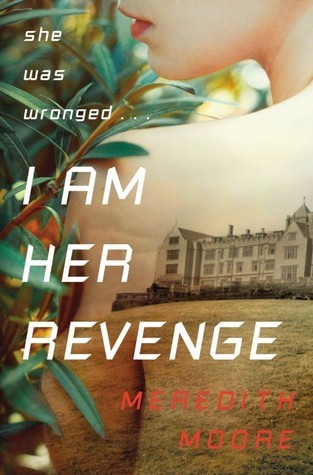
Book Review: I Am Her Revenge by Meredith Moore


I Am Her Revenge

She can be anyone you want her to be.
Vivian was raised with one purpose in life: to exact revenge on behalf of her mother. Manipulative and cruel, Mother has deprived Vivian not only of a childhood, but of an original identity. With an endless arsenal of enticing personalities at her disposal, Vivian is a veritable weapon of deception.

And she can destroy anyone.
When it’s time to strike, she enrolls in a boarding school on the English moors, where she will zero in on her target: sweet and innocent Ben, the son of the man who broke Mother’s heart twenty years ago.

Anyone… except for the woman who created her.
With every secret she uncovers, Vivian comes one step closer to learning who she really is. But the more she learns about herself, the more dangerous this cat and mouse game becomes. Because Mother will stop at nothing to make sure the truth dies with her.


I Am Her Revenge by Meredith Moore is a fanciful book bordering on unrealistic. It begins with the heroine Vivian making the grand entrance into a boarding school in Yorkshire. We gradually find out the sole purpose she goes to that school a month into her senior year is solely to entice another student, Ben Collingsworth. Extremely weird and creepy. Worse, it’s her mother Morgana who’s behind all the elaborate plots. Ages ago, Ben’s father broke Morgana’s heart, and she’s bent on revenge: I have a daughter, and you have a son; it’s a match made in heaven. She plants Vivian into the school through questionable means and expects her daily and weekly report on the seduction plan. As Vivian goes through the plan, she discovers Ben is a nice person and does not deserve ruin. The rest are spoilers.

The book’s setting is in England, but I can’t help but think it’s an alternate universe entirely. That’s the only reason the whole irrational revenge plot can progress. Moreover, children and even young adults play with Avatars called Ava that can talk with them and be their “friends.” This phenomenon is probably what kids would do before social media, but Moore published this book in 2015, so it must be another universe in which kids don’t have Facebook or Instagram or Twitter to feed their ego and have fake friends. While I applaud Moore’s effort to create a world suitable to her story, it’s just too unrealistic to be believable.

Vivian is a narcissistic person. She thinks she can charm anyone and with her charisma and “skills” and is quite proud of her looks. “I am irresistible,” she actually says somewhere. She callously hurts or flatters teachers and students, whichever suits her agenda. In many instances, she excuses herself as a product of her mother’s upbringing. She also believes her mother “deserves her revenge. He broke her heart, so now she’ll break his.” Vivian is either extremely naive and stupid or severely brainwashed. Hilariously, the author is not willing to let such a vapid person go without a redeeming quality. Vivian can somehow draw with amazing talent. So yes, the only thing she can’t do is looking carefully at her mother’s revenge plan and seeing the obvious ludicrousness of it all.

Vivian’s mother Morgana is also the craziest person in the book. She treats Vivian with unspeakable cruelty and treachery just for her “revenge.” For example, when Vivian takes home several homeless kittens, her mother slits their throats and makes Vivian watch the whole process just to teach her a lesson on not loving anything in the world. I couldn’t understand Morgana and her silly obsession with revenge: your boyfriend falls in love with someone else. What a tool! But you don’t spend the rest of your life plotting his downfall and implicate your daughter and another innocent young man into your game. But of course, the author discovers the improbability of ending the story with such a revenge plan (not all of us can be Alexandre Dumas), and she thankfully concocts a slapdash but plausible theory that explains Morgana’s action. In short, Morgana is one seriously dotty but vivid character. 


Yet another inexplicable and bizarre duo in the book is the Helper and the Boy. There’s no given reason for them to stick with Morgana and do her dirty works. She has somehow wound the Helper around her little finger, so that probably explains why he’s willing to dance to her pipe. But the Boy? The Boy has no name because his father the Helper never named him. So it’s up to our heroine to name him Arthur, in keeping with the Arthurian theme going on in the book. And he can write poetry. What is life.

I Am Her Revenge is an incredibly strange and laughable book. It’s plot is fundamentally flawed, and its pacing is probably a main reason many readers DNF. It’s like a creaky elevator that inches to the top floor and then before you know it, the cable breaks and whoosh, whoosh, BAM, the end. If you’re looking for an amusing read and isn’t too fazed by stupidity, you can try it. Forewarned is forearmed.
CONTINUE READING»

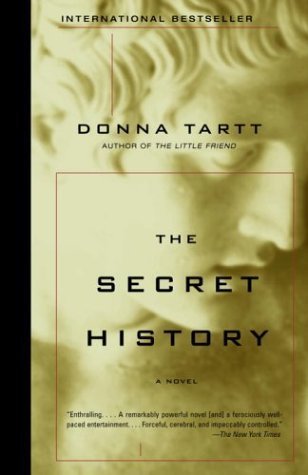
Blast From the Past Book Review: The Secret History by Donna Tartt


Last month I read a particularly entertaining book---The Secret History by Donna Tartt. It's an old book published in 2004--eleven years! It was on my To-Read list for quite a while, but I never seemed to get to it until recently. Now I’m glad I did; it’s one of those books that drones on like a great-uncle hard of hearing, and after sticking with it for a while it just suddenly swings you around by your neck, like a seal waving a penguin around. Okay, maybe not that, but you get what I mean.

Plot: Richard Papen, a Californian kid comes to Hampden, Vermont for college. He enrolls into a elite Greek program with the highly selective old professor to study Classics. Eventually he’s accepted into the little clique of students, Henry, Charles, Camilla, Francis, and Bunny. Alcohol, cigarettes and esoteric discussions. Talk about Greek life. They have a period of harmonious and fun-on-the-beach friendship, then the book takes a nosedive into the bizarre. Bacchanal involving drinking and a dead Vermont farmer and leaked secrets. Tension stews in the little circle and their camaraderie eventual collapses into bits. And then BAM, an unexpected ending.

Character: One of the best things about this book is its character development. At the beginning, all Richard can see is a bunch of glossy trust-fund kids drinking and smoking. As the book progresses, he begins to see the real nature of each one of them. Bunny, especially, grows from a nice, goofy guy into a cunning, money-sucking parasite who thrives on jabbing at the insecurity of others. Each chapter brings a new layer to the characters, new secrets they hide. Donna Tartt emphasizes on the complexity of human nature and that none of us are completely evil or good. Even when Richard hates Bunny the most, he still has moments of déja vu in which the old Bunny and the new, twisted one are indistinguishable. Francis is my favorite character in the book entire due to the fact he never once betrays Richard’s trust and is always up front with him. Henry Winter, another important character in the book, is also interesting to read. First introduced as a quiet, somewhat aloof, and highly intellectual person (really, think Sherlock Holmes in college without all that deduction skillz), he shows his warm side to nature (rose-bushes and his garden) and the protagonist when he takes Richard into his own home when he has nowhere to go. Later on, however, he becomes so calloused and calculating to the point Richard no longer knows whether or not to trust him. Weirdly enough, he claims to have led a gray life up till the murder. Then he feels the world changes into a sharper, more colorful hue. I think he is the most extraordinary character in the whole book.

In the characters we see the intricacy of human nature and its clueless ugliness. During their plotting and secrecy the characters lose what’s left of their innocence and candidacy to face others and themselves. The Secret History also explores the theme of life and making choices. At one watershed point in the book the main character thinks “who ARE these people anyway? What am I doing with them?” and realizes he can simply walk away and escape all the drama and anguish he knows he’s diving into. Instead he stays and gets his guts torn by his decision (literally). We all have moments that define and even decide the course of our lives. Sometimes we feel like there’s only one way and we just have to do something. That’s not true. We always have a choice, and it’s our own reluctance to follow that particular path that lead to our final destination. God always leaves a way out for us, and it’s only our fault if we choose to ignore it and head for destruction. Seeing this can help us face our own fault instead of blaming it on circumstances. I love how Donna Tartt explores this theme and how she points out our active role in making the right choices.

CONTINUE READING»